Easter Sale! Get 2 Memberships for the price of ONE!

 Emilie Apel
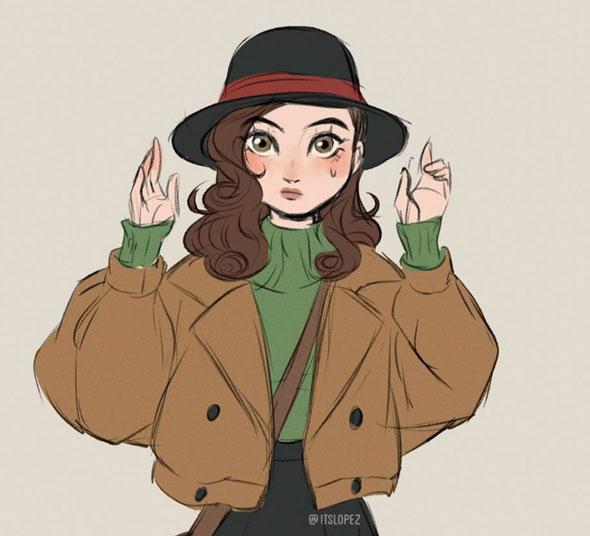
Eyes are often considered the most expressive feature of a face—capturing emotion, personality, and even backstory. Whether you’re sketching a child’s wide-eyed wonder, a teenager’s intense gaze, or an adult’s more mature expression, drawing eyes requires both technique and understanding of the subtle differences in anatomy.
In today’s email, we’ll share some tips on how to draw eyes that truly stand out, with a focus on age-specific characteristics.
This email was inspired by Laia Lopez and her fantastic Digital Illustration for Beginner’s! Don’t worry, if digital illustration isn’t your thing, we just launched a NEW course with Rodgon to Learn Anatomy in 21 Days! Go check out these amazing courses to take your skills to the next level.
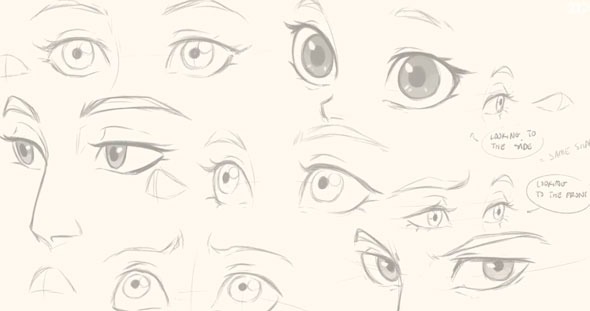
Before diving into details, it’s essential to understand the basic structure of the eye. The eye is roughly spherical, and its shape can change based on the angle from which you’re viewing it. The eyelids, lashes, and surrounding skin help define the expression. Spend some time sketching the eye in different positions and angles to familiarize yourself with its form and how the light hits it.
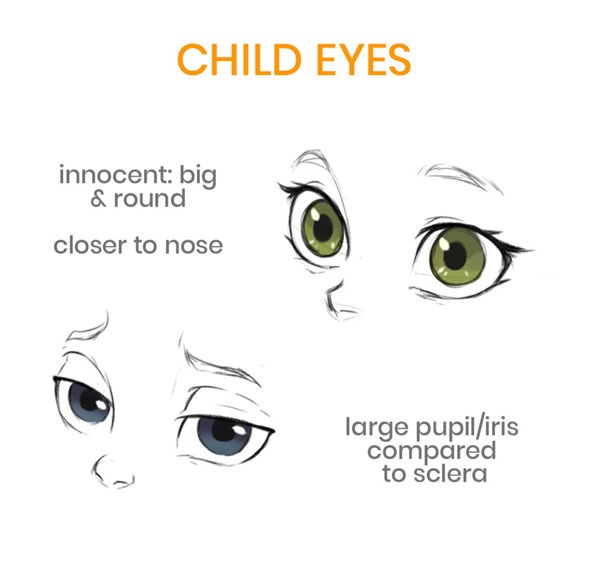
When drawing a child’s eyes, the most important feature is size. Children typically have larger eyes in proportion to their faces, and the irises are much larger compared to the whites of the eyes. Their eyes also appear more circular than adults’, and the eyelids are softer, with less defined creases. The skin around their eyes is smooth, and there’s often a soft glow or sparkle in the iris to capture the innocence and curiosity of youth. Add highlights in the eyes for that extra twinkle.
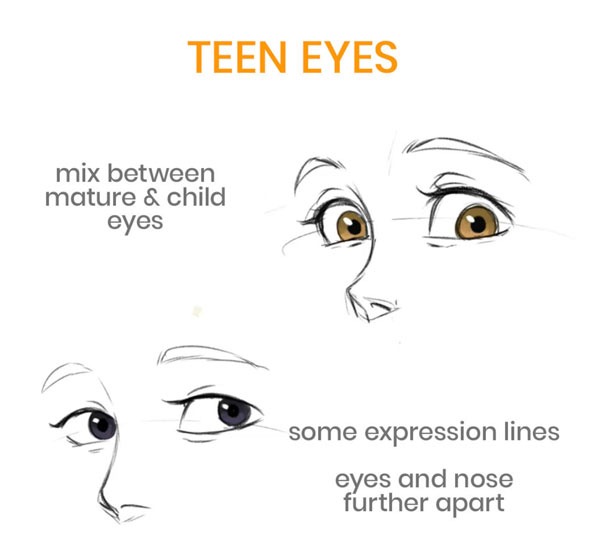
Teenagers are in the process of transitioning between childhood and adulthood. The eyes are smaller in proportion compared to a child’s, and they become more defined. The eyelid shape starts to take on a more angular or mature look.
Teenagers also have more visible eyelashes and may have slightly more pronounced dark circles or bags under the eyes, depending on the emotional or physical stress they’re experiencing. The iris is still relatively large but now more proportionate to the eye size. Capture their youthful energy by focusing on the intensity of their gaze—teenagers often convey deep emotion through their eyes.
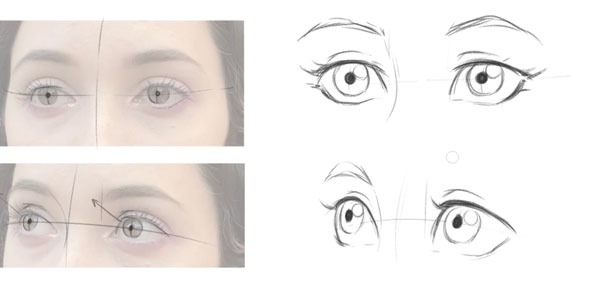
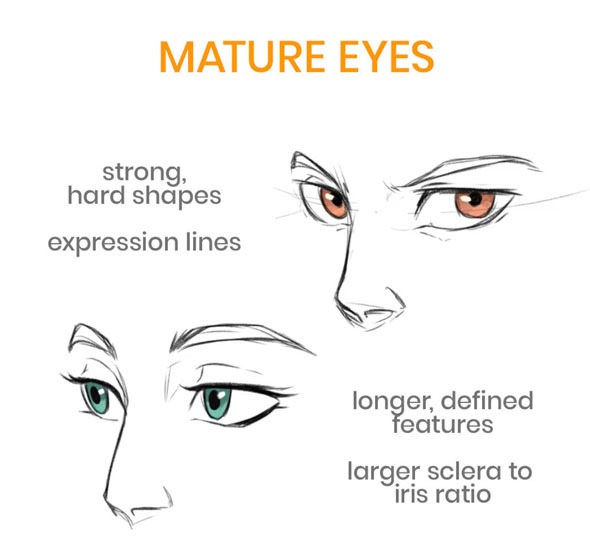
In adults, the eyes are more proportional to the face. The eyelids become more defined with a noticeable crease, and the whites of the eyes may be less prominent than in younger individuals. The skin around the eyes also shows more subtle lines and texture, especially as age increases. When drawing adults, pay attention to the natural variations in skin folds, crow’s feet, and under-eye bags. These details add depth and character, helping to convey maturity and experience.
With these tips, you’ll be well on your way to creating eyes that are not only accurate in shape but full of emotion and life, whether you’re drawing a child, teen, or adult.
Remember, if you’re looking for ways to take your skills to the next level, check out Laia Lopez’s fantastic Digital Illustration for Beginner’s! Or if you’re looking for something different, we just launched a NEW course with Rodgon to Learn Anatomy in 21 Days. Go check out these amazing courses to make your greatest artistic visions a reality!
Keep practicing, and let your characters’ eyes do the talking!
Emilie Apel
Emilie Apel is a French/American multidisciplinary artist based in the U.S. She travels frequently to Nepal and loves exploring the fusion between her meditation practice and art. Emile's favorite medium is watercolors.
 Give one for FREE.
Get started
Give one for FREE.
Get started




 Gift Cards